session实现用户登录
下面将使用session实现用户登录,如下图所示效果: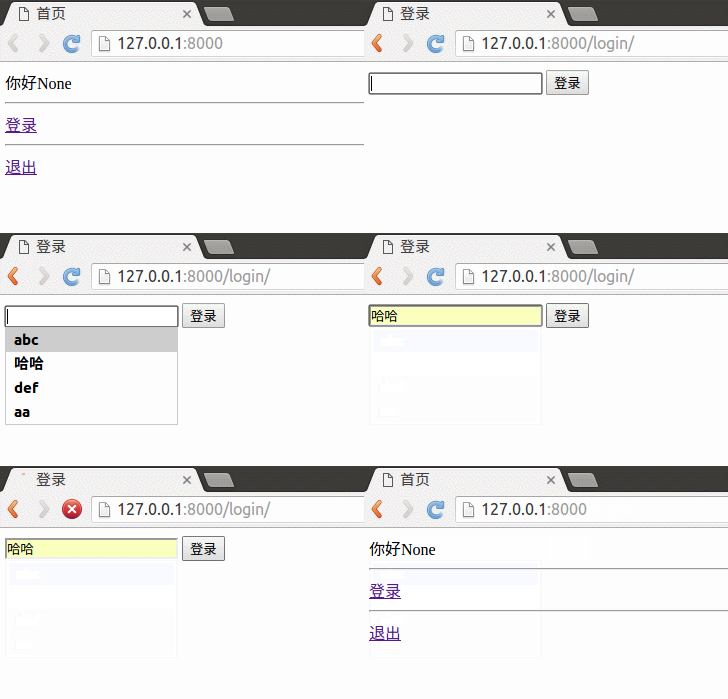
步骤:
1.在views.py文件中创建视图(假定我们创建了一个名为booktest的应用)
def index(request):
    uname = request.session.get('myname', default='未登录')
    context = {'uname': uname}
    return render(request, 'booktest/index.html', context)


def login(request):
    return render(request, 'booktest/login.html')


def login_handle(request):
    uname = request.POST['uname']
    request.session['myname'] = uname
    return redirect('/booktest/index/')


def logout(request):
    # del request.session['myname']  # 删除会话
    # request.session.clear()  # 清除所有会话
    request.session.flush()  # 删除当前的会话数据并删除会话的Cookie
    return redirect('/booktest/index/')
2.配置url
主url:
from django.conf.urls import include, url
from django.contrib import admin

urlpatterns = [
    url(r'^booktest/', include("booktest.urls", namespace='booktest')),
]
应用url:
from django.conf.urls import include, url
import views


urlpatterns = [
    url(r'^index/$', views.index),
    url(r'^login/$', views.login),
    url(r'^login_handle/$', views.login_handle),
    url(r'^logout/$', views.logout3),

]
3.创建模板
index.html

<!DOCTYPE html>
<html lang="en">
<head>
    <meta charset="UTF-8">
    <title>Title</title>
</head>
<body>
你好:{{ uname }}
<br>
<a href="/booktest/session2/">登录</a>
<br>
<a href="/booktest/session3/">退出</a>
</body>
</html>

login.html

<!DOCTYPE html>
<html lang="en">
<head>
    <meta charset="UTF-8">
    <title>Title</title>
</head>
<body>
<form method="post" action="/booktest/session2_handle/">
    <input type="text" name="uname">
    <input type="submit" name="登录">
</form>
</body>
</html>
4.配置模板路径DIRS
注:templates为和应用同级的文件夹,本应用的模板存在templates/booktest/下
TEMPLATES = [
    {
        'BACKEND': 'django.template.backends.django.DjangoTemplates',
        'DIRS': [os.path.join(BASE_DIR, 'templates')],
        'APP_DIRS': True,
        'OPTIONS': {
            'context_processors': [
                'django.template.context_processors.debug',
                'django.template.context_processors.request',
                'django.contrib.auth.context_processors.auth',
                'django.contrib.messages.context_processors.messages',
            ],
        },
    },
]